
Introduction
Fire safety is one of the most important aspects of protecting lives, property, and business operations. A well-designed Fire Alarm System provides early detection of fire, allowing occupants to evacuate safely while minimizing damage to buildings and valuable assets.
At Digi Fire Pro, we provide professional Fire Alarm System design, AutoCAD drawings, shop drawings, BOQ preparation, installation support, commissioning, and maintenance services for residential, commercial, and industrial projects.
This guide explains everything you need to know about fire alarm systems, including their components, types, benefits, applications, installation process, and maintenance requirements.
What is a Fire Alarm System?
A Fire Alarm System is an electronic life safety system designed to detect smoke, heat, or fire and immediately alert building occupants through audible and visual alarms. Modern systems can also notify emergency responders and integrate with other building safety systems such as sprinklers, smoke control, elevators, and access control.
The primary purpose of a fire alarm system is to provide early warning, giving people enough time to evacuate safely and allowing emergency teams to respond quickly.
Why Fire Alarm Systems Are Important
Installing a fire alarm system is essential for protecting people and property. Some of the major benefits include:
- Early fire detection
- Faster emergency response
- Protection of lives
- Reduced property damage
- Compliance with local fire safety regulations
- Business continuity
- Insurance benefits
- Improved occupant safety
A professionally designed system significantly reduces the risk of severe fire damage and helps organizations meet legal safety requirements.
Types of Fire Alarm Systems
Conventional Fire Alarm System
Conventional systems divide a building into multiple zones. When a detector activates, the control panel identifies the affected zone rather than the exact device.
Best for:
- Small offices
- Villas
- Schools
- Retail shops
- Residential buildings
Addressable Fire Alarm System
Addressable systems assign a unique address to every detector and device. This allows the control panel to identify the exact location of the fire.
Advantages
- Faster fault detection
- Easier maintenance
- Accurate device identification
- Lower false alarms
- Better system monitoring
Ideal for:
- Hospitals
- Hotels
- Airports
- Commercial complexes
- Industrial facilities
Wireless Fire Alarm System
Wireless fire alarm systems use radio communication instead of cables.
Advantages include:
- Faster installation
- Less disruption
- Ideal for heritage buildings
- Easy expansion
Intelligent Fire Alarm System
These systems continuously monitor detector conditions and use advanced algorithms to reduce false alarms while improving detection accuracy.
Main Components of a Fire Alarm System
Fire Alarm Control Panel (FACP)
The Fire Alarm Control Panel is the brain of the entire system. It monitors all devices, processes alarm signals, and controls notifications.
Functions include:
- Alarm monitoring
- Fault monitoring
- Device communication
- Event logging
- System control
Smoke Detectors
Smoke detectors identify smoke particles before flames spread.
Common types include:
- Photoelectric Smoke Detector
- Ionization Smoke Detector
- Multi-Sensor Detector
Heat Detectors
Heat detectors activate when temperature reaches a preset level.
Types include:
- Fixed Temperature
- Rate of Rise
- Combination Heat Detector
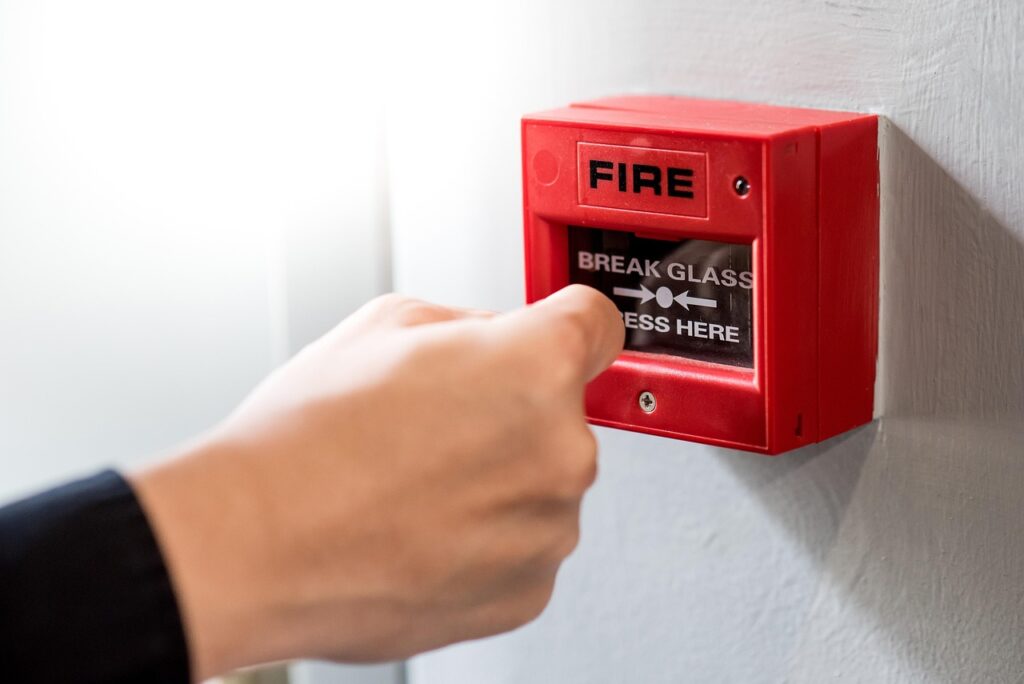
Manual Call Point (MCP)
Manual Call Points allow occupants to manually activate the fire alarm during an emergency.
Sounders and Hooters
These produce audible alarms throughout the building to alert occupants.
Strobe Lights
Visual alarm devices assist hearing-impaired occupants and improve emergency notification.
Fire Alarm Modules
Modules provide communication between the control panel and external equipment.
Examples:
- Input Modules
- Output Modules
- Relay Modules
- Monitor Modules
- Control Modules
Batteries
Backup batteries ensure continuous operation during power failures.
Fire Alarm System Design
Professional fire alarm design includes:
- Building risk assessment
- Device selection
- Detector spacing
- Cable routing
- Loop design
- Power calculations
- Battery calculations
- Cause & Effect Matrix
- Panel sizing
- Future expansion planning
Proper engineering ensures reliable system performance and regulatory compliance.
AutoCAD Fire Alarm Drawings
Professional documentation typically includes:
- Fire Alarm Layout
- Loop Drawings
- Riser Diagram
- Single Line Diagram
- Device Schedule
- Cable Schedule
- Panel Layout
- BOQ
- Equipment Schedule
These drawings support installation, inspection, commissioning, and maintenance activities.
Installation Process
Professional installation generally includes:
- Site Survey
- Design Review
- Material Verification
- Cable Installation
- Device Installation
- Panel Installation
- Programming
- Testing
- Commissioning
- Client Handover
Each stage should follow applicable fire safety standards and manufacturer recommendations.
Fire Alarm Testing
Testing ensures every component operates correctly.
Typical tests include:
- Detector Testing
- MCP Testing
- Sounder Testing
- Battery Testing
- Communication Testing
- Panel Function Test
- Fault Simulation
- Integration Test
Preventive Maintenance
Regular maintenance helps keep systems reliable.
Maintenance activities include:
- Visual inspection
- Detector cleaning
- Battery inspection
- Panel health check
- Device testing
- Cable inspection
- Event log review
- System updates
Routine maintenance reduces faults and extends equipment life.
Applications
Fire alarm systems are used in:
- Residential Buildings
- Apartments
- Commercial Offices
- Shopping Malls
- Hospitals
- Hotels
- Warehouses
- Factories
- Educational Institutions
- Data Centers
- Airports
- Industrial Plants
Fire Alarm and Other Safety Systems
Modern fire alarm systems integrate with:
- Fire Sprinkler Systems
- Smoke Extraction Systems
- CCTV
- Access Control
- Public Address Systems
- Building Management Systems (BMS)
- Emergency Lighting
- Gas Suppression Systems
Integration improves emergency response and overall building safety.
Common Fire Alarm Problems
Some common issues include:
- False alarms
- Dirty detectors
- Battery failure
- Cable faults
- Communication errors
- Detector obstruction
- Improper installation
- Lack of maintenance
Professional inspection helps identify and resolve these issues before they become critical.
Why Choose Digi Fire Pro?
Digi Fire Pro provides complete fire alarm engineering solutions including:
- Fire Alarm System Design
- AutoCAD Drawings
- Shop Drawings
- BOQ Preparation
- Installation Support
- Testing & Commissioning
- As-Built Drawings
- Annual Maintenance Services (AMC)
- Technical Consulting
Our goal is to deliver reliable, standards-based, and cost-effective fire protection solutions tailored to each project.
Frequently Asked Questions
How often should a fire alarm system be tested?
Routine inspections and testing should be carried out according to local regulations, applicable standards, and the manufacturer’s recommendations.
Can fire alarm systems integrate with CCTV?
Yes. Modern systems can integrate with CCTV, access control, sprinkler systems, and building management systems.
What is the difference between Conventional and Addressable systems?
Conventional systems identify the affected zone, while addressable systems identify the exact device location, making troubleshooting and response faster.
Why are AutoCAD drawings important?
They provide accurate layouts, installation guidance, maintenance references, and documentation for inspections and future modifications.
Conclusion
A professionally designed and maintained Fire Alarm System is one of the most important investments for protecting lives and property. Whether you need a new installation, AutoCAD drawings, shop drawings, BOQ preparation, commissioning support, or ongoing maintenance, choosing experienced professionals helps ensure reliable performance and long-term safety.
At Digi Fire Pro, we are committed to delivering dependable fire protection engineering solutions for residential, commercial, and industrial projects. Our focus on quality, technical expertise, and customer satisfaction enables us to support every stage of your fire safety project—from planning and design to installation, documentation, and maintenance.
hi